
The Quick Answer
Getting your garage door ready for winter in Clovis means dealing with the switch from dry, dusty fall air to damp mornings, Tule fog, and real rain. That means clearing out summer grit, re-lubricating moving parts with something made for the job, checking weatherstripping so water and cold air stay out, and testing balance and auto-reverse before the door has to work harder in cold, damp conditions. None of this takes a full day, but skipping it is how a minor squeak turns into a dead opener or a flooded garage floor in January.
Why Local Winters Are Harder on a Garage Door Than People Expect
Clovis and the surrounding Fresno County area don't get snow or ice, but the shift from a long dry season into winter rain is still rough on garage door hardware. Months of dust and dry heat leave a fine grit baked into rollers, hinges, and track grease. Once the rain starts, that grit turns into a gritty paste that grinds down moving parts fast. Add in foggy, damp mornings that settle moisture on exposed metal overnight, and you've got the two biggest threats to a garage door heading into winter: abrasive buildup and rust.
There's also the simple physics of it. Lubricant that worked fine in 100-degree summer heat can stiffen up on a cold, foggy morning, making the opener strain to lift a door that should move smoothly. If springs or rollers are already worn, that extra strain in winter is often what finally breaks them.
Clear Out the Summer Dust Before It Turns to Grime
Before you do anything else, wipe down the tracks, rollers, and springs with a dry cloth to remove the dust that's accumulated over the dry season. Vacuum out the bottom track where leaves and debris tend to collect, especially after windy fall days. This step matters more than people think — rain and fog will mix with leftover dust to form a paste that clogs rollers and accelerates wear on the track surface.
Check Weatherstripping and Seals Before the First Real Storm
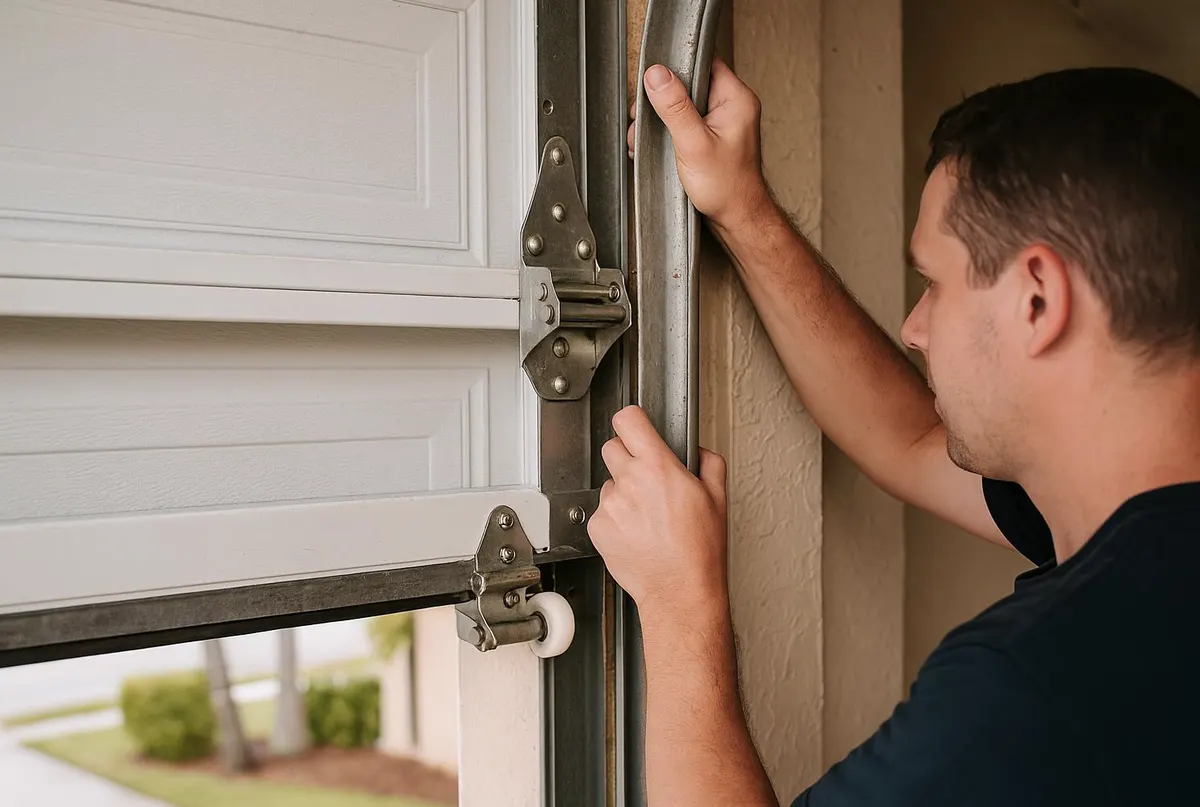
Weatherstripping is your garage's first defense against winter rain and cold air, and it's easy to ignore until water is already pooling on the floor. Walk around the door and check:
- The bottom seal — look for cracking, flattening, or gaps where it no longer sits flush against the concrete.
- Side and top weatherstripping — check for daylight showing through or sections that have pulled away from the frame.
- The threshold area — if your garage sits at a slight slope or has had water intrusion in past winters, a threshold seal kit can redirect runoff instead of letting it pool against the door.
Replacing worn weatherstripping is inexpensive compared to dealing with water damage to stored items, drywall, or a wood-paneled door that swells and warps after repeated soaking.
Lubricate Before Cold, Damp Mornings Make the Opener Work Harder
Skip the WD-40 — it's a solvent, not a lubricant, and it actually strips grease off metal over time. Use a silicone-based or lithium-based garage door lubricant on:
- Rollers (not the nylon rollers themselves if sealed, just the bearings)
- Hinges
- The torsion or extension springs
- The track where rollers make contact
Lubricating now, before the foggy mornings set in, keeps everything moving smoothly instead of forcing the opener motor to fight stiff, grit-covered parts. A door that's straining on cold mornings is also putting extra stress on the springs — and that's exactly when a worn spring tends to give out.
Test the Balance and Auto-Reverse Safety Features
With the opener disconnected, lift the door halfway by hand. It should stay in place on its own. If it drifts down or feels heavy, the springs are losing tension — a problem that shows up more in winter because cold air makes metal contract slightly, which can expose marginal springs that were just barely getting by. Also test the auto-reverse safety feature by placing a block of wood in the door's path; it should reverse immediately on contact. This matters year-round, but winter storms sometimes bring power flickers that can reset opener settings, so it's worth a quick check now.
Inspect Hardware for Rust and Loose Fasteners
Fog and morning dew settle on exposed bolts, hinges, and the bottom bracket over the cooler months. Look for surface rust starting on hinges or the track mounting hardware, and tighten any bolts that have worked loose from a summer of use. Catching rust early means a quick wire-brush-and-touch-up job instead of replacing a corroded hinge mid-winter.
When to Call Clovis Garage Door
If you go through this checklist and find a door that won't stay balanced, a spring that looks stretched or has visible gaps between coils, or an opener that struggles more than it should on a cool morning, it's time to call in a professional before the issue gets worse under winter conditions. Our Garage Door Maintenance service covers a full inspection, lubrication, and hardware tightening so your door is ready for the season. If we find a spring on its way out, our Spring Replacement team can get it swapped safely — springs under tension aren't a DIY repair, and a failed spring in the middle of a storm is the kind of thing that turns into an emergency call.
If you're in Clovis, Fresno, Sanger, Madera, Selma, Reedley, Kerman, or Fowler and want your garage door squared away before the rain sets in, give Clovis Garage Door a call. We'll show up on time, check the door over, and make sure it's ready to handle whatever this winter brings.