
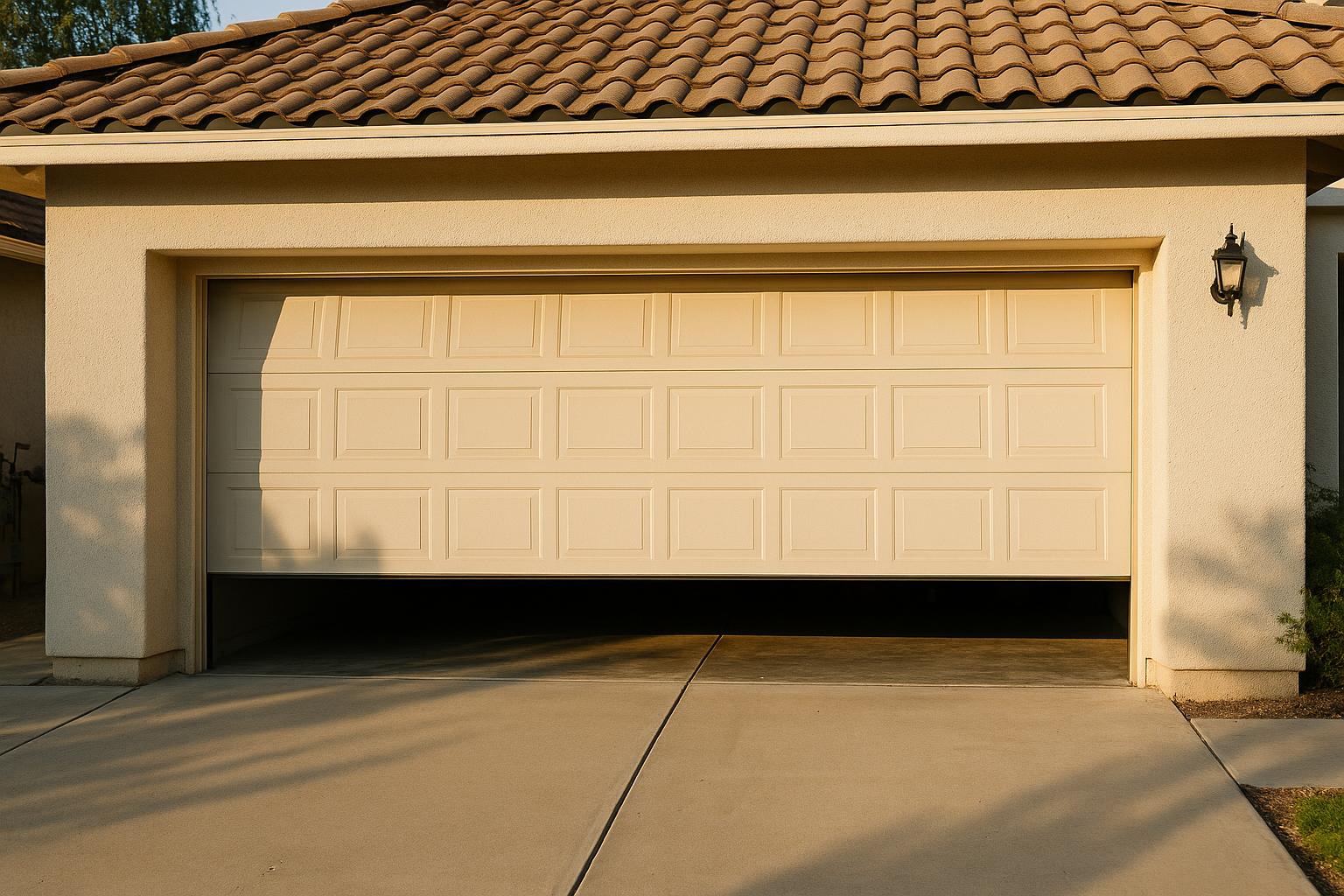
A Frustrating Problem That's More Common Than You Think
You press the button on your garage door remote, watch the door start its descent, and then — just before it reaches the floor — it reverses and goes right back up. You try again. Same result. If you're a homeowner in Clovis dealing with this maddening cycle, you're not alone. This is one of the most common garage door complaints we hear, and the good news is that it's usually fixable.
A garage door that reverses before closing completely isn't just an inconvenience. It's a security risk, leaving your home exposed to intruders, pests, and the elements. During Clovis summers, when temperatures regularly climb past 100°F, an open garage can also turn your home into an oven. Let's walk through the most common reasons this happens and what you can do about it.
1. Misaligned or Dirty Safety Sensors
This is the number one cause of a garage door reversing before it reaches the ground. Every garage door opener manufactured after 1993 is required to have photo-eye safety sensors — two small devices mounted near the bottom of the door tracks on either side. These sensors send an invisible beam across the opening, and if anything breaks that beam, the door reverses to prevent crushing a person, pet, or object.
Here's what can go wrong with your sensors:
- Misalignment: If one sensor gets bumped — maybe by a bicycle, a trash can, or even a curious kid — the beam can't connect, and the door thinks something is in the way.
- Dirt and debris: Central Valley dust is no joke. A thin layer of grime on the sensor lens can weaken the beam enough to cause intermittent reversals.
- Sun interference: In Clovis, afternoon sun can shine directly into a west-facing sensor and overwhelm it, mimicking a blocked beam.
What You Can Do
Start by wiping both sensor lenses with a soft cloth. Then check that both sensors have a steady green or amber light (depending on your model). If one is blinking, it's likely misaligned. Gently adjust it until the light holds steady. If sun glare is the issue, a small piece of cardboard fashioned into a shade over the sensor can work wonders.
2. The Close-Limit Switch Needs Adjustment
Your garage door opener has limit switches that tell it how far the door should travel when opening and closing. If the close-limit switch is set incorrectly, the opener may think the door has hit an obstruction when it's actually just reaching the floor. The opener's built-in safety feature then kicks in and reverses the door.
What You Can Do
Most openers have limit adjustment screws on the back or side of the motor unit. Consult your owner's manual for the exact location. Small adjustments — usually a quarter turn at a time — can make a big difference. Be careful not to over-adjust, as setting the limit too far can cause the door to press too hard against the floor and damage the weatherseal or the opener itself.
3. Worn or Broken Garage Door Springs
Your garage door springs do the heavy lifting — literally. They counterbalance the weight of the door so the opener doesn't have to work as hard. When springs wear out or break, the door becomes significantly heavier. The opener struggles to control the descent, detects excessive resistance, and reverses as a safety precaution.
What You Can Do
Spring issues are not a DIY repair. Garage door springs are under extreme tension and can cause serious injury if handled improperly. If you suspect a spring problem — you might hear a loud bang from the garage, see a visible gap in the spring, or notice the door feels unusually heavy when lifted manually — call a professional. Our team handles spring replacements throughout Clovis and the greater Fresno County area every week, and we can typically get it done in a single visit.
4. Track Problems
The metal tracks that guide your garage door need to be properly aligned and free of obstructions. A bent track, a buildup of debris, or even a small rock lodged in the track can create enough resistance to trigger the opener's auto-reverse feature.
What You Can Do
Visually inspect both tracks from top to bottom. Look for dents, bends, or gaps between the track and the wall-mounted brackets. Clear out any visible debris. Minor bends can sometimes be gently tapped back into shape with a rubber mallet, but significant track damage usually requires professional attention to avoid making the problem worse.
5. Worn Rollers or Hinges
Over time, the rollers that ride inside your tracks and the hinges that connect your door panels can wear out. Worn nylon rollers develop flat spots. Metal rollers lose their bearings. Hinges crack or seize up. Any of these issues can create friction that the opener interprets as an obstruction.
What You Can Do
Inspect your rollers for visible wear — chips, cracks, or wobbling. Check hinges for rust or stiffness. Replacing rollers is a relatively straightforward repair for a garage door technician, and upgrading to high-quality nylon rollers can make your door noticeably quieter too.
6. Problems With the Opener Itself
If you've checked everything else and the door still reverses, the issue may be with the opener's logic board or motor. Electrical surges, age, and general wear can cause openers to malfunction. Older openers — especially those more than 15 years old — are particularly prone to these issues.
What You Can Do
Try unplugging the opener for 30 seconds and plugging it back in. This can reset the logic board and resolve minor glitches. If the problem persists, it may be time for a repair or replacement. Modern openers come with improved safety features, battery backup, and smartphone connectivity that many Clovis homeowners find well worth the upgrade.
When to Call a Professional
Some of the fixes above are safe for a handy homeowner to attempt. But if you're dealing with spring issues, significant track damage, or an opener that's acting erratically despite your troubleshooting, it's time to bring in a professional. Garage doors are the largest moving component in most homes, and working on them without the right tools and training can be dangerous.
At Clovis Garage Door, we diagnose and fix reversing issues regularly for homeowners across Clovis, Fresno, Sanger, and the surrounding communities. We show up on time, explain exactly what's wrong, and give you an honest quote before any work begins. No surprises, no upselling — just reliable service from a local team that takes pride in doing things right.
Don't Ignore a Reversing Garage Door
A garage door that won't close all the way is more than an annoyance. It compromises your home's security, energy efficiency, and your family's safety. Whether the fix is as simple as wiping a sensor or as involved as replacing a torsion spring, addressing the problem promptly saves you money and headaches in the long run. If you've tried the basic troubleshooting steps and the door is still giving you trouble, give us a call. We're here to help.