
When Your Garage Door Starts Talking, You Should Listen
You press the button on your garage door opener and instead of a smooth, quiet operation, you hear grinding, squealing, rattling, or banging. If your garage door has started making strange noises, it's trying to tell you something — and ignoring it usually leads to a bigger, more expensive problem down the road.
As a garage door company serving Clovis and the surrounding Fresno County area, we get calls about noisy garage doors every week. The good news is that most of these issues are fixable, and understanding what each sound means can help you decide whether it's a quick DIY fix or something that requires a professional.
Common Garage Door Noises and What They Mean
Squealing or Screeching
A high-pitched squeal when your garage door opens or closes is one of the most common complaints we hear from homeowners in Clovis. This sound usually points to one of two issues:
- Lack of lubrication: Metal parts like rollers, hinges, and tracks need periodic lubrication to operate smoothly. Over time, especially in the dry Central Valley climate, these components dry out and create friction that produces that unpleasant squealing sound.
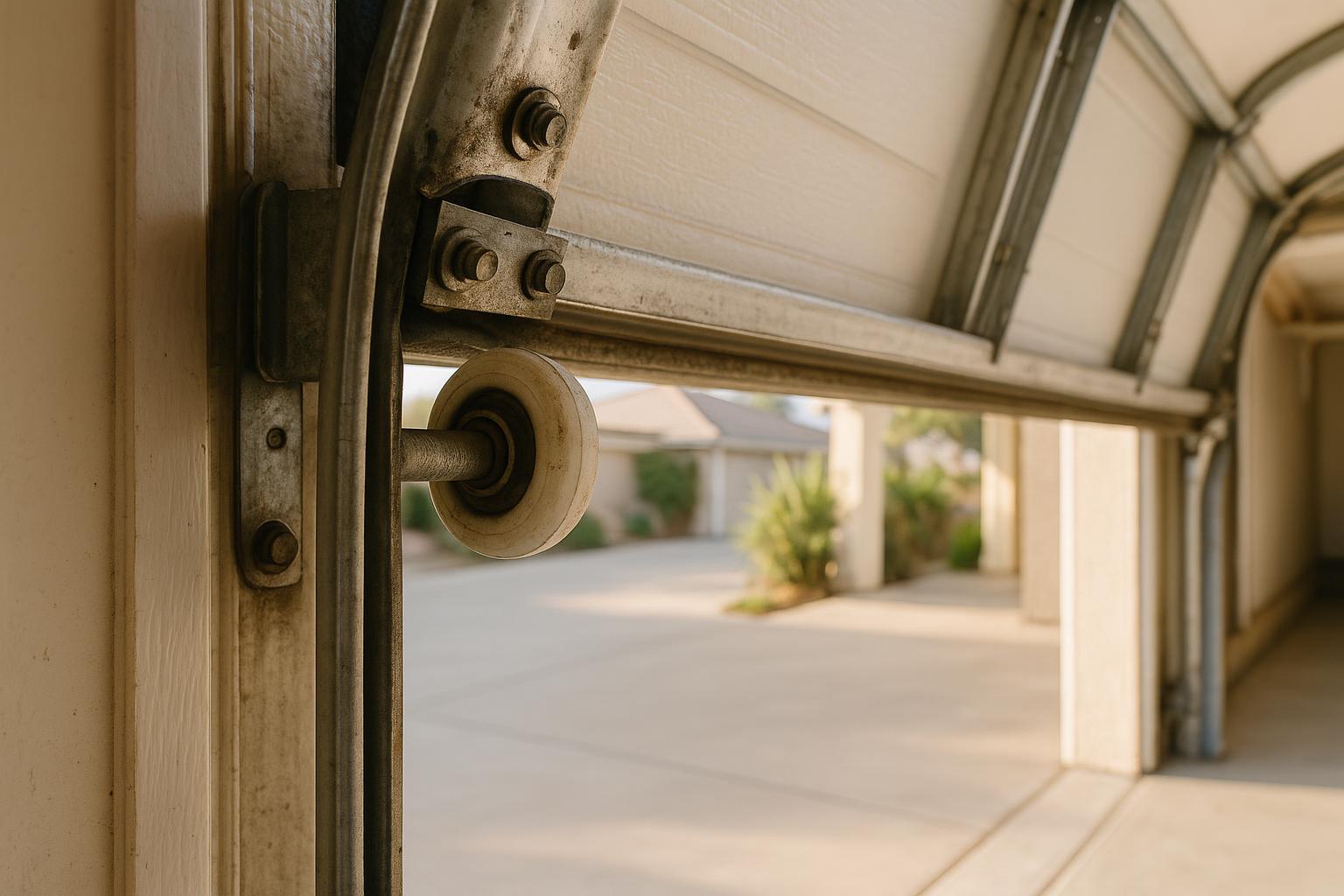
- Worn rollers: If your door uses metal rollers without nylon coatings, they can wear down and begin scraping against the track. Nylon rollers are quieter and last longer, making them a popular upgrade.
Grinding or Scraping
A grinding noise is more concerning than a squeal. This typically means metal is dragging against metal in a way it shouldn't be. Common causes include:
- Misaligned tracks: If your garage door tracks have shifted or bent, the door can scrape against them as it moves. You might also notice the door moving unevenly or getting stuck at certain points.
- Worn gears in the opener: If the grinding sound is coming from the opener unit mounted on the ceiling, the internal gears may be stripped or wearing down. This is especially common in older chain-drive openers.
Rattling or Vibrating
A rattling garage door often sounds worse than it actually is. In many cases, the fix is straightforward:
- Loose hardware: Nuts, bolts, and screws on the door, tracks, and brackets can loosen over time due to the constant vibration of daily use. A simple tightening with a socket wrench can often eliminate the rattle.
- Loose chain or belt: If you have a chain-drive opener, a loose chain can slap against the rail and create a rattling noise. Belt-drive openers can develop a similar issue if the belt stretches.
Banging or Popping
A loud bang or pop when your garage door operates is harder to ignore — and for good reason. This noise can indicate:
- Torsion spring issues: Springs that are under too much or too little tension can pop or bang as the door moves. If a spring is on the verge of breaking, you might hear a loud snap. This is a dangerous repair that should always be handled by a professional.
- Panel problems: Warped or damaged panels can pop as they flex under the tension of the door system. This is more common on older wooden doors or doors that have been impacted.
Humming Without Movement
If you press the button and hear the opener hum or buzz but the door doesn't move, the motor is running but can't engage the door. This could mean:
- A broken spring: Without functional springs to counterbalance the door's weight, the opener motor simply can't lift it. The door may feel incredibly heavy if you try to open it manually.
- A stripped gear or broken drive: Internal components in the opener may have failed, preventing the motor from translating its power into movement.
Simple Maintenance You Can Do Yourself
Some noisy garage door issues can be resolved with basic maintenance that any homeowner can handle:
- Lubricate moving parts: Apply a silicone-based or lithium-based garage door lubricant to the rollers, hinges, springs, and tracks every six months. Avoid using WD-40 as a long-term lubricant — it's a solvent that can actually strip away grease over time.
- Tighten loose hardware: Go over all the visible nuts and bolts on the door and track system with a wrench. Don't overtighten, but make sure nothing is loose.
- Inspect the tracks: Look for visible dents, bends, or debris in the tracks. Wipe them clean with a damp cloth. If you notice significant bending or misalignment, call a professional rather than trying to bend them back yourself.
- Check the weatherstripping: Worn or damaged weatherstripping along the bottom of the door can cause dragging noises. Replacement strips are inexpensive and easy to install.
When to Call a Professional
While basic maintenance is safe for homeowners, certain garage door repairs are genuinely dangerous to attempt on your own. You should call a professional if:
- The noise involves the torsion springs mounted above the door. These are under extreme tension and can cause serious injury if handled improperly.
- The tracks are significantly misaligned or bent. Improper track adjustment can cause the door to fall.
- The opener motor is making grinding noises internally. Electrical and mechanical components inside the unit require proper tools and expertise.
- The noise is accompanied by the door moving unevenly, getting stuck, or feeling unusually heavy. These symptoms combined with strange sounds often indicate multiple failing components.
Don't Wait Until a Noise Becomes a Breakdown
A noisy garage door is more than just an annoyance — it's an early warning system. The sounds your door makes can alert you to problems while they're still small and affordable to fix. Waiting until the door stops working entirely almost always costs more and creates a bigger inconvenience, especially if your car is stuck inside the garage on a Monday morning.
If your garage door has started making sounds that weren't there before, it's worth getting it checked out. At Clovis Garage Door, we offer honest assessments and fair pricing on all repairs. We serve homeowners throughout Clovis, Fresno, Sanger, Madera, and the rest of Fresno County, and we're happy to diagnose the problem and walk you through your options before any work begins.
Whether it's a simple lubrication fix or a more involved repair, addressing a noisy garage door now can save you from a costly emergency later. Give us a call and let's get your garage door running quietly again.