
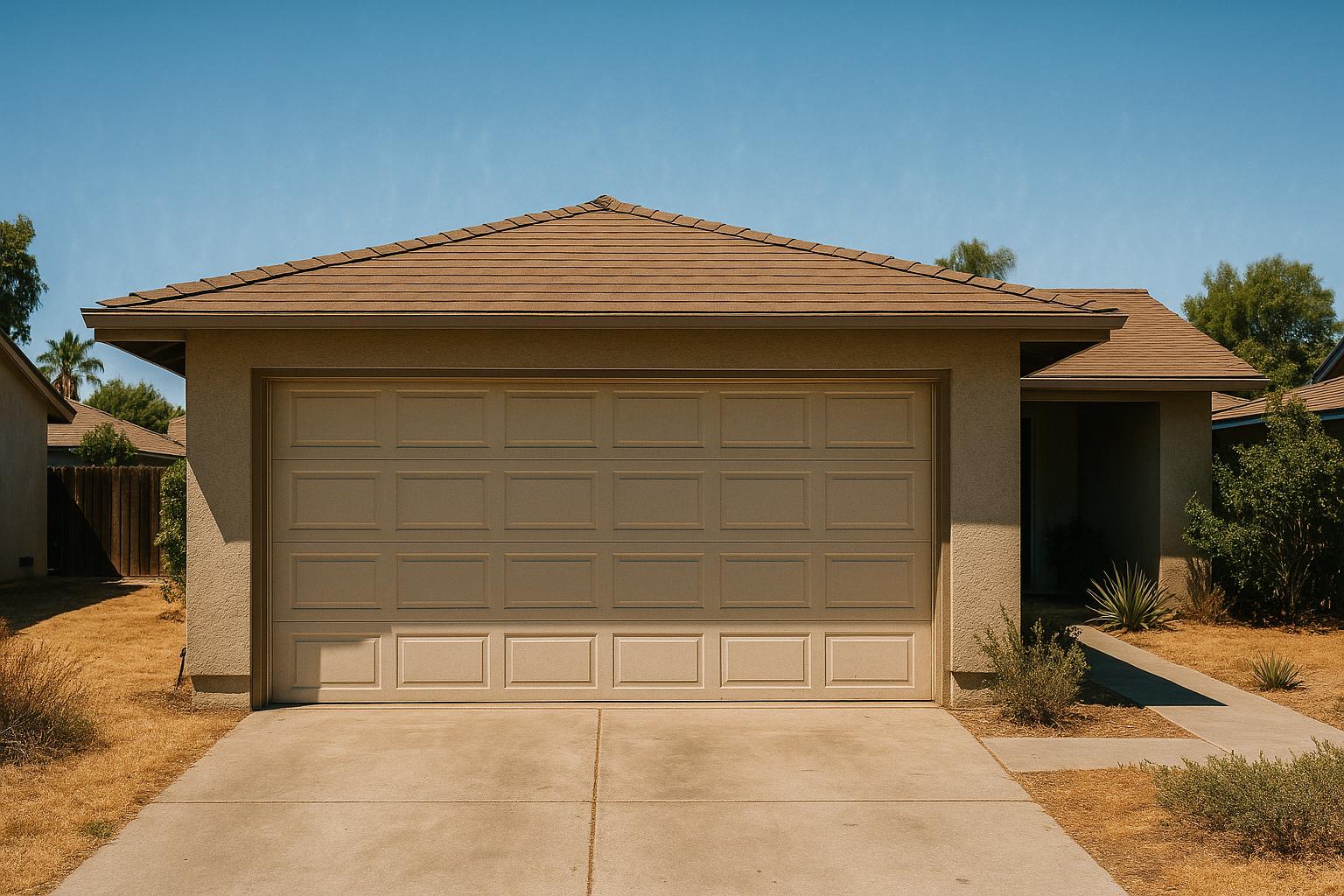
Summer in Clovis Means Triple-Digit Heat — Is Your Garage Door Ready?
If you've lived in Clovis or anywhere in the Fresno County area for more than a year, you know that summer doesn't ease in gently. Temperatures regularly climb past 100°F, and that intense heat affects more than just your comfort level. Your garage door — one of the largest moving parts of your home — takes a beating during the hottest months of the year.
From warping panels to overheating openers, the Central Valley summer creates real problems for garage doors that aren't properly maintained. The good news is that a little preparation now can save you from expensive emergency repairs later. Here's what you need to know to keep your garage door functioning reliably all summer long.
How Extreme Heat Affects Your Garage Door
Most homeowners don't think about how temperature impacts their garage door, but heat causes a range of issues that can shorten the life of your door and its components.
Metal Expansion
Garage door tracks, springs, and hardware are made of metal, and metal expands in high heat. When temperatures swing from cool mornings to scorching afternoons — something that happens regularly in Clovis — this repeated expansion and contraction puts stress on your door's components. Over time, this can cause tracks to become misaligned, bolts to loosen, and springs to weaken faster than expected.
Warping and Cracking
Wooden garage doors are especially vulnerable to heat. Prolonged sun exposure can cause panels to warp, crack, or peel. Even steel and aluminum doors can develop issues when the sun beats down on them for hours every day. If your garage faces west or south, your door is absorbing an enormous amount of direct sunlight throughout the afternoon.
Opener Overheating
Your garage door opener has a motor, and motors generate heat. When the ambient temperature inside your garage is already 120°F or higher — which is common in uninsulated Clovis garages during summer — your opener is working in extreme conditions. This can cause the motor to overheat, trigger thermal overload protection, or simply burn out prematurely.
Weatherstripping Deterioration
The rubber weatherstripping along the bottom and sides of your garage door degrades faster in extreme heat. UV rays break down the material, causing it to crack, shrink, and lose its seal. Once that seal is compromised, hot air, dust, and pests can get into your garage more easily.
Steps to Prepare Your Garage Door for Summer
Taking a proactive approach before the worst of the heat arrives can make a significant difference. Here's a practical checklist to follow.
1. Lubricate All Moving Parts
Heat dries out lubricant faster, which means more friction on your springs, rollers, hinges, and tracks. Apply a silicone-based or lithium-based garage door lubricant to all moving parts. Avoid using WD-40 as a long-term lubricant — it's a solvent, not a true lubricant, and it evaporates quickly in high heat.
2. Inspect and Replace Weatherstripping
Check the rubber seal along the bottom of your garage door and the weatherstripping around the frame. If it's cracked, brittle, or pulling away, replace it before summer is in full swing. Fresh weatherstripping helps keep your garage cooler and prevents dust and insects from getting inside.
3. Check Your Door's Balance
A properly balanced garage door puts less strain on the opener motor. To test the balance, disconnect the opener by pulling the release handle, then manually lift the door halfway. If it stays in place, it's balanced. If it slides up or drops down, the springs may need adjustment. This is a job best left to a professional, since garage door springs are under extreme tension and can be dangerous to handle.
4. Tighten Hardware
Go over all the bolts, brackets, and screws on your garage door and track system. The vibration from daily use combined with thermal expansion can loosen hardware over time. A simple socket wrench is usually all you need, but be careful not to overtighten anything.
5. Test the Auto-Reverse Safety Features
Place a block of wood or a roll of paper towels on the ground in the door's path and close the door. It should reverse immediately upon contact. Also check that the photo-eye sensors on either side of the door are clean and properly aligned. Dust buildup is common in our area, and dirty sensors can cause your door to behave erratically.
6. Consider Insulation
If your garage is attached to your home, an uninsulated garage door lets a tremendous amount of heat transfer into your living space, forcing your air conditioning to work harder. Insulated garage doors or aftermarket insulation kits can reduce the temperature inside your garage by 20 degrees or more. This not only helps with energy bills but also protects anything you store in the garage — tools, paint, electronics, and even your car's interior.
7. Inspect the Door Panels
Look closely at each panel for signs of warping, cracking, fading, or rust. Small problems are much cheaper to address now than after they've worsened through a full summer of heat exposure. If you have a wooden door, consider resealing or repainting it to add a protective layer against UV damage.
When to Call a Professional
Some summer prep tasks are easy to handle yourself, but others require a trained technician. You should call a professional if:
- Your door is visibly off-track or crooked
- The springs appear rusty, stretched, or damaged
- Your opener is making unusual sounds or struggling to lift the door
- The door won't stay open when disconnected from the opener (a sign of a balance issue)
- You notice significant panel damage or warping
Attempting to repair springs, cables, or track alignment on your own can result in serious injury. These components are under high tension and require specialized tools and training to handle safely.
Schedule a Summer Tune-Up
The easiest way to make sure your garage door is ready for the Clovis heat is to schedule a professional maintenance visit. A trained technician can inspect every component, lubricate moving parts, test safety features, and catch small problems before they turn into big ones.
At Clovis Garage Door, we see a spike in repair calls every summer — and most of those issues could have been prevented with basic maintenance. Whether you're in Clovis, Fresno, Sanger, or anywhere else in the surrounding area, we're here to help you keep your garage door running smoothly through the hottest months of the year.
Don't wait until your garage door stops working on the hottest day of the summer. A little preparation now goes a long way toward avoiding the hassle and expense of an emergency repair when you need your door the most.