
Your Garage Door Springs Are Working Harder Than You Think
Every time you open or close your garage door, the springs are doing the heavy lifting — literally. A standard two-car garage door can weigh between 150 and 250 pounds, and the springs are responsible for counterbalancing all of that weight. Without them, your garage door opener couldn't move the door at all.
For homeowners in Clovis and the surrounding Fresno County area, garage door springs are one of the most critical — and most overlooked — components of the entire system. Most people don't think about their springs until one breaks, and that usually happens at the worst possible time. Understanding the lifespan of your springs and recognizing the warning signs of wear can save you from an unexpected breakdown, or worse, a safety hazard.
How Long Do Garage Door Springs Last?
The lifespan of a garage door spring is measured in cycles. One cycle equals one full open and one full close of the door. Most standard torsion springs are rated for approximately 10,000 cycles, which translates to roughly 7 to 10 years of average use.
However, that estimate assumes you're opening and closing your garage door about 3 to 4 times per day. If your household uses the garage as the primary entry point — which is common in many Clovis neighborhoods — you might be running 6 to 8 cycles per day. In that case, your springs could wear out in as little as 4 to 5 years.
High-cycle springs are also available, rated for 25,000 or even 50,000 cycles. These cost more upfront but can last significantly longer, making them a smart investment if you want to avoid frequent replacements.
Torsion Springs vs. Extension Springs
There are two main types of garage door springs, and knowing which type you have helps you understand what to expect:
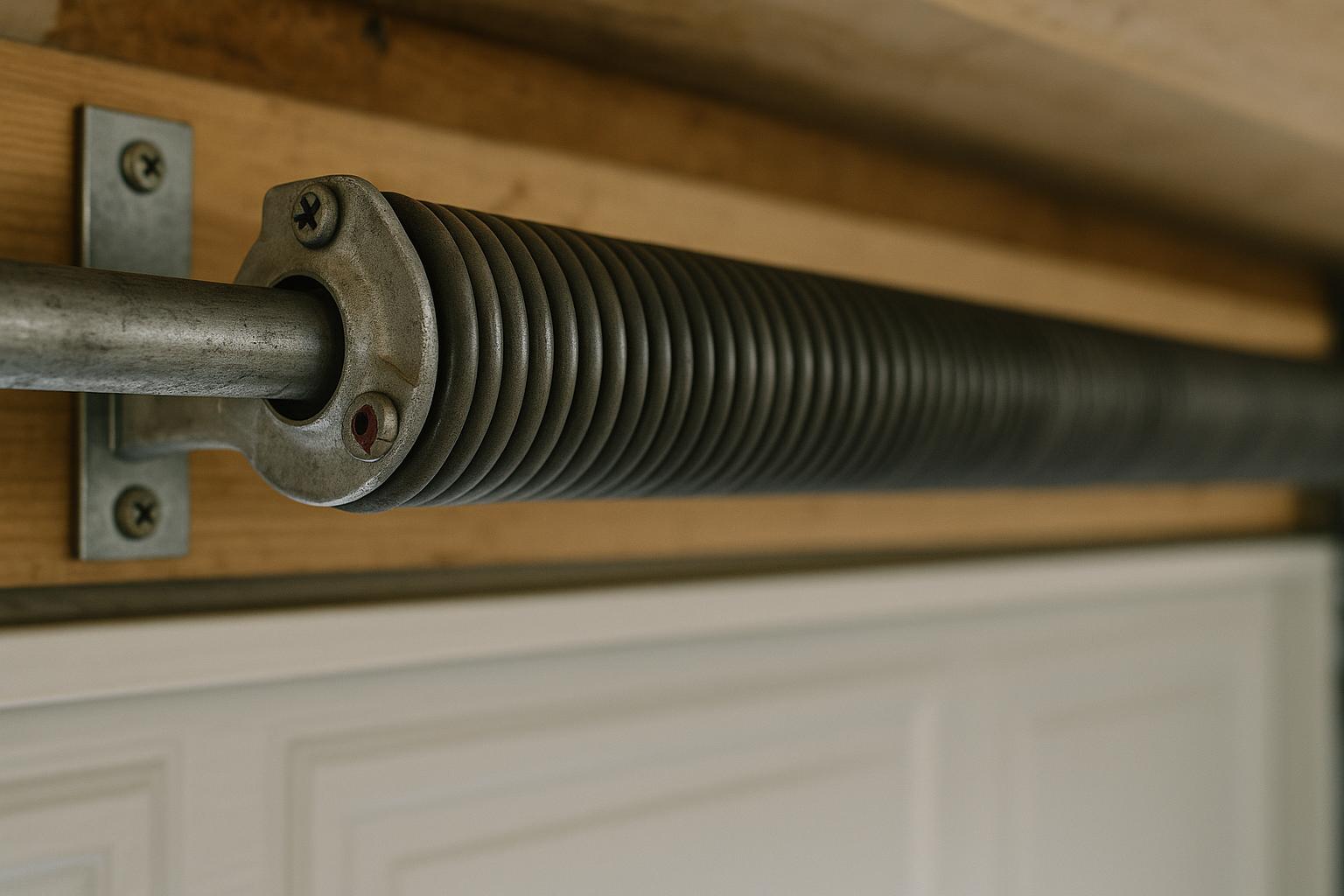
- Torsion springs are mounted horizontally above the garage door opening. They use torque to lift the door and are the more common type in modern garage door systems. They tend to be more durable and provide smoother operation.
- Extension springs run along the horizontal tracks on either side of the door. They stretch and contract to provide lifting force. These are more common in older homes and lighter doors but can be more prone to wear and pose a greater safety risk if they snap without safety cables.
If your home in Clovis still has extension springs, it may be worth upgrading to torsion springs during your next replacement. They offer better balance, longer life, and improved safety.
Warning Signs Your Springs Are Wearing Out
Springs rarely fail without giving some warning signs first. Here's what to watch for:
The Door Feels Heavier Than Usual
Try disconnecting your garage door opener and lifting the door manually. A properly balanced door with healthy springs should lift smoothly and stay open about three to four feet off the ground. If the door feels extremely heavy or slams shut, your springs are losing tension.
The Door Opens Unevenly
If one side of the door rises faster than the other, it could mean one spring is weaker than its counterpart. This puts extra strain on the opener and the remaining spring, accelerating wear on both.
Visible Gaps in the Spring Coils
Take a look at your torsion spring above the door. When a spring is in good condition, the coils are tightly wound together. If you notice gaps or separation between the coils, the spring is stretched and nearing the end of its life.
Loud Bang From the Garage
If you heard a loud bang coming from your garage — almost like a firecracker — and your door won't open, a spring has likely already broken. This is the sound of the coiled metal releasing its stored energy. Do not attempt to operate the door if this happens.
The Opener Struggles or Stops
Your garage door opener is designed to move a balanced door, not lift the full weight on its own. If the opener is straining, making grinding noises, or stopping mid-cycle, worn springs may be forcing it to work too hard.
Can You Replace Garage Door Springs Yourself?
This is one of the most common questions we get, and the answer is straightforward: we strongly recommend against DIY spring replacement. Garage door springs are under extreme tension. A torsion spring stores enough energy to cause serious injury or even death if it's mishandled.
Every year, thousands of people across the country are injured attempting DIY garage door spring repairs. Professional technicians have the specialized tools, training, and experience to replace springs safely. It's one of those jobs where the risk simply isn't worth the savings.
What Does Spring Replacement Cost?
The cost of replacing garage door springs varies depending on the type of spring, the size of your door, and whether one or both springs need replacement. In general, homeowners in the Clovis and Fresno area can expect to pay between $150 and $350 for a standard torsion spring replacement, including parts and labor.
If one spring has broken, we typically recommend replacing both springs at the same time. They were installed together and have the same amount of wear, so the second spring is likely close behind. Replacing both at once saves you from paying for a second service call in a few months.
How to Extend the Life of Your Springs
While springs will eventually wear out no matter what, regular maintenance can help you get the most out of them:
- Lubricate your springs every six months with a silicone-based garage door lubricant. This reduces friction and prevents rust, which weakens the metal.
- Schedule annual maintenance with a professional. A technician can check spring tension, balance the door, and catch small problems before they become big ones.
- Don't ignore unusual sounds. Squeaking, popping, or grinding noises are your door's way of telling you something needs attention.
- Consider high-cycle springs if you use your garage door frequently. The upfront cost is higher, but the long-term value is significant.
When to Call a Professional in Clovis
If you've noticed any of the warning signs listed above, or if it's been more than seven years since your springs were last replaced, it's a good idea to have them inspected. Catching a worn spring before it breaks means you can schedule the replacement on your terms instead of dealing with an emergency.
At Clovis Garage Door, we provide honest assessments and fair pricing on spring replacements throughout Clovis, Fresno, Sanger, Madera, Selma, and Reedley. We show up on time, explain what needs to be done, and get your door working safely again — no upselling, no surprises.
If your garage door springs are due for attention, give us a call today to schedule an inspection or replacement. A little preventive care now can save you a lot of hassle down the road.