
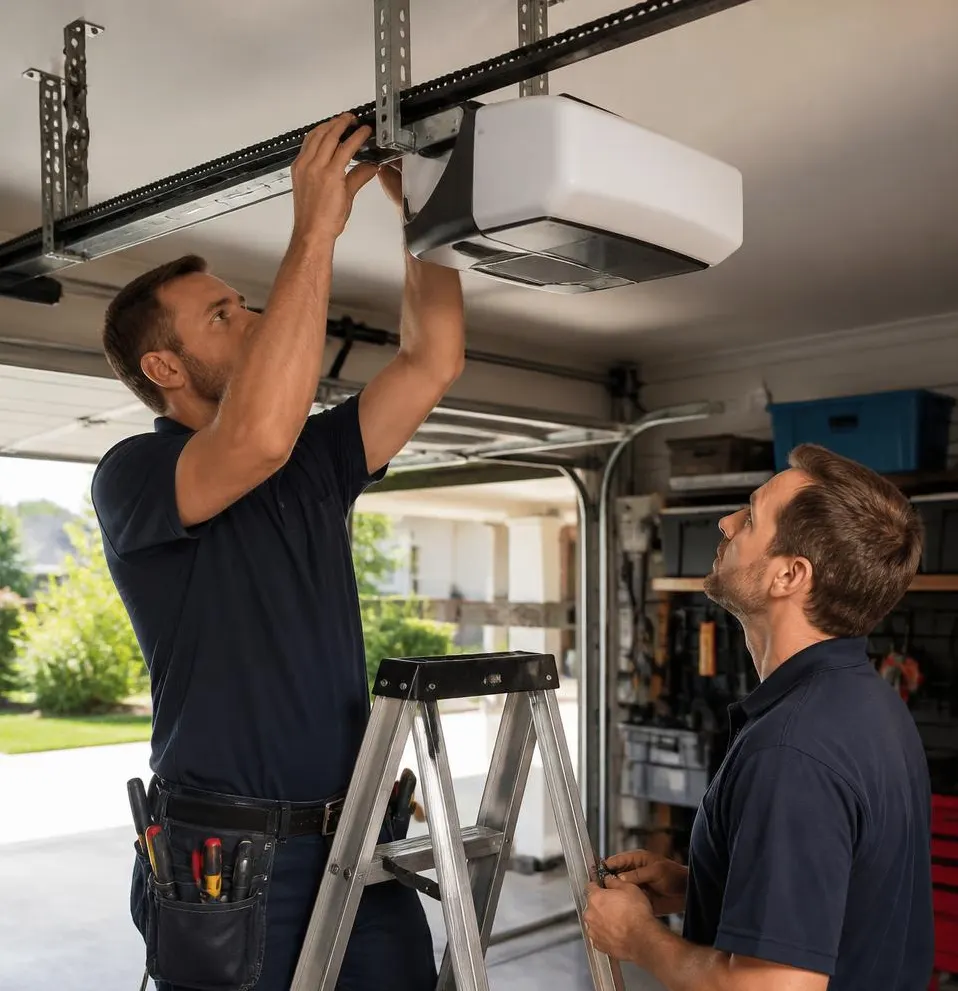
What a Technician Sees on These Calls
The calls usually come in right after a windy front blows through: a homeowner notices the garage door bowing visibly in the middle of a gust, or finds a section dented from a trash can lid or tree branch that got picked up and thrown against it. Sometimes the complaint is quieter — the door just won't seal at the bottom anymore, and water is creeping in under the threshold during the first hard rain of the season. In almost every case, the door was fine in July. It's the first real wind-and-rain event of fall or winter that finds the weak points.
Why the Garage Door Is the Weakest Wall in the House
Every other wall in a typical home is a solid, continuous structure tied into the framing. The garage door is a large moving panel held in place by hinges, rollers, tracks, and a handful of mounting brackets — and it's often the biggest single opening in the entire house. When wind pushes against that surface, the force has to travel through those same hinges and brackets instead of a solid wall. On older doors, especially ones installed before wind-load bracing became common, that force can be enough to pop rollers out of the track, bend panels, or in worse cases pull the door off its track entirely. Once the garage door fails, wind pressure inside the garage can put stress on the roof structure above it, which is why building codes in wind-prone regions now call for reinforced doors on new construction.
Pre-Storm Inspection: What to Check Before the Rain Rolls In
Before the valley's winter storm pattern sets in, walk the door and look for these specific issues:
- Track alignment. Stand back and sight down each track. Gaps, bends, or rollers sitting loosely in the rail are a sign the door won't handle lateral wind pressure well.
- Panel condition. Look for dents, hairline cracks, or warping, particularly on steel doors that have taken hits from yard debris. A dent doesn't just look bad — it can throw off the door's balance and create a weak spot that flexes more than the rest of the panel.
- Weatherstripping and bottom seal. After a long dry season of dust and heat, rubber seals often crack, shrink, or pull away from the frame. This is the main entry point for wind-driven rain.
- Hardware tightness. Hinges, bolts, and roller brackets loosen over time from daily opening and closing. A quarter-turn of play in a hinge can become a real problem under gust-force wind.
- Opener force settings. If the opener is straining or reversing unexpectedly in windy conditions, the force settings may need adjustment, or the opener itself may be underpowered for the door's weight.
Reinforcement Options Worth Considering
If the inspection turns up real weak points, there are a few practical paths depending on the door's age and condition:
Retrofit Bracing
Horizontal struts can be added to the back of many existing steel doors to stiffen the panels against wind pressure. This is a reasonable middle-ground fix for a door that's structurally sound but was never built with wind load in mind.
Reinforced Rollers and Tracks
Upgrading to heavier-gauge tracks and nylon rollers reduces the chance of a roller jumping the track during a strong gust, and it's a lower-cost fix than a full door replacement.
Full Door Replacement
For doors that are already dented, warped, or more than 15-20 years old, patch fixes often aren't worth it. Many current garage doors are built with wind-load ratings and come with factory-reinforced panels designed specifically for areas that see strong seasonal wind events, which is a meaningful upgrade over an older unreinforced door.
Don't Forget Routine Maintenance
Beyond structural concerns, basic maintenance makes a real difference once storms start rolling through. Lubricate hinges and rollers so they're not fighting corrosion from months of dust exposure. Check that the garage door opener's safety sensors are clean and properly aligned — dust buildup from the dry season can interfere with the sensor beam, causing the door to behave unpredictably right when you need it to seal tight against a storm. If your home has had earthquake retrofit work done, it's also worth confirming that the garage door opening wasn't affected in a way that changed how the door sits in its frame.
When to Call Clovis Garage Door
If your inspection turns up bent track, a sagging panel, torn weatherstripping, or an opener that's struggling, it's worth having it looked at before the next storm rather than after. Our Garage Door Maintenance service covers the full inspection — track alignment, hardware tightness, seals, and opener performance — so small issues get caught before wind turns them into bigger ones. If the door itself is damaged, undersized for today's wind-load standards, or simply old enough that patching it doesn't make sense anymore, our Garage Door Installation service can get you set up with a properly reinforced door built for the conditions this part of Fresno County actually sees.
If you're in Clovis, Fresno, Sanger, Madera, Selma, Reedley, Kerman, or Fowler and want your garage door checked before the next storm front moves in, give Clovis Garage Door a call. We'll show up on time, tell you honestly what needs attention, and get it handled right.